SnapTara Blog
How to Photograph Reflections in Puddles and Windows
To photograph a good reflection, find still water or clean glass, get your lens down close to the surface, and expose for the reflected scene rather than the bright sky or street around it. Puddles after rain and shop windows after dark are the easiest places to start, and both work beautifully on a phone.
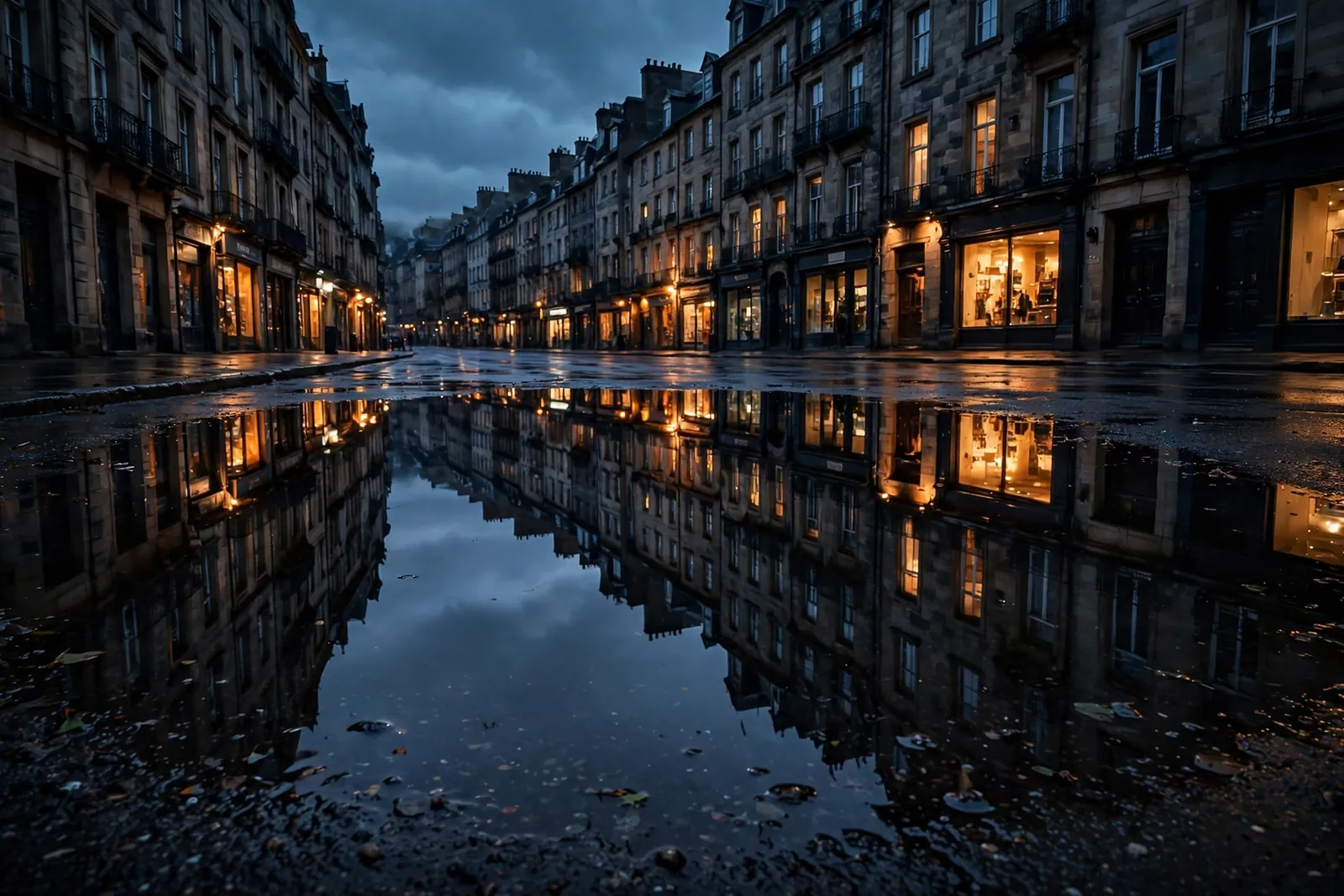
The idea
This weekend, wait for rain (or go out within an hour or two after it stops) and walk one familiar street looking only at the ground and the glass. Your assignment is simple: photograph that street only in its reflections. Shoot a building, a sign, a traffic light, or a passer by as they appear in a puddle or a window, not directly. One short prompt sums it up: shoot the place, not the thing. By the end of the walk you want five frames where the reflection is the picture, not a decoration inside it. If the weekend stays dry, use the window half of the plan on its own: lit shop windows, bus shelters, and office glass all reflect well on any clear evening.
How to capture it
Where and when
Puddles work best when the water is still and the air has calmed down, which usually means shortly after rain rather than during it. Shallow puddles on smooth pavement reflect more cleanly than deep ones on gravel, and a puddle in open shade or under a bright sign gives you an even, readable reflection. Late afternoon and blue hour are prime time: the sky in the water is still bright, street lights and signs switch on, and you get colour in the reflection that the real scene does not have. For windows, shoot at dusk or after dark, when the glass acts partly as a mirror and partly as a window into a lit interior. That layered look is the whole point. Stand at an angle to the glass rather than square on, or you will photograph yourself.
Settings
On a phone, tap on the reflection itself to focus and set exposure there, then slide the brightness down a touch, because reflections usually look richer slightly underexposed. Turn the flash off, wipe the lens (pocket smudges flare badly against wet, bright scenes), and try the 2x lens if your phone has one: it tightens the frame onto the best part of the puddle and keeps your own feet and shadow out. On a camera, start in aperture priority around f/4 to f/5.6, which keeps the reflection sharp without making every crack in the pavement compete with it. Use a shutter speed of at least 1/250 for reflections with people in them, let the ISO float, and dial in about −0.7 stops of exposure compensation as a starting point. Focus on the reflected subject, not on the surface of the water. The two are at different distances, and the reflection is the one that needs to be sharp.
Composition
Get low. Crouch, kneel, or hold the phone just above the puddle. The lower your angle, the larger and clearer the reflection becomes, because you are seeing more of the surface at the angle that mirrors the scene. Fill the frame with the puddle or pane so the reflection has room to breathe, and decide deliberately whether to include the real subject at the top of the frame or show the reflection alone; the reflection only version is usually the stranger, stronger picture. Try flipping a finished puddle shot upside down when you edit: the reflection becomes the scene and the real world becomes the echo, which is a perfectly honest way to present what caught your eye. Leave a clean edge: a frame that cuts awkwardly through the middle of the water looks accidental, while a frame that includes the puddle's full edge looks chosen.
Mistakes to avoid
- Shooting from standing height. From up there a puddle is mostly grey pavement with a smudge in it; the mirror effect only appears when you get down near the surface.
- Exposing for the whole scene. Your meter averages the dark ground and the bright reflection and pleases neither. Expose for the reflection and let the surroundings go darker.
- Photographing your own reflection by accident. Check the corners for your feet, your shadow, and your phone in the glass before you press the shutter, especially with windows.
Variations to try
- Real and reflected together: frame a sign, building, or person in the top half of the shot and its reflection filling the bottom half, so the viewer gets the scene and its double in one frame.
- Broken reflections: wait for a footstep, a passing tire, or a dropped leaf to ripple the puddle, and shoot the moment the reflection breaks into painterly pieces.
- Window layers: at night, compose so a lit interior, a reflection of the street behind you, and one passer by all share the same pane of glass: three scenes in a single exposure, no editing required.
If reflections hook you, keep going with the Light Chasers Challenge on the homepage: fourteen days of prompts built around seeing and shaping light, reflections included.
Want another idea like this one? The free SnapTara generator on the homepage hands you a fresh photography prompt in seconds, drawn from more than a thousand hand written assignments, and its themed Challenges turn a single idea into a week or a month of shooting.
Get a photography promptRelated posts
- More photography ideas and shooting tips on the SnapTara blog: a new post lands every Tuesday and Friday