SnapTara Blog
Photograph Lit Windows at Blue Hour
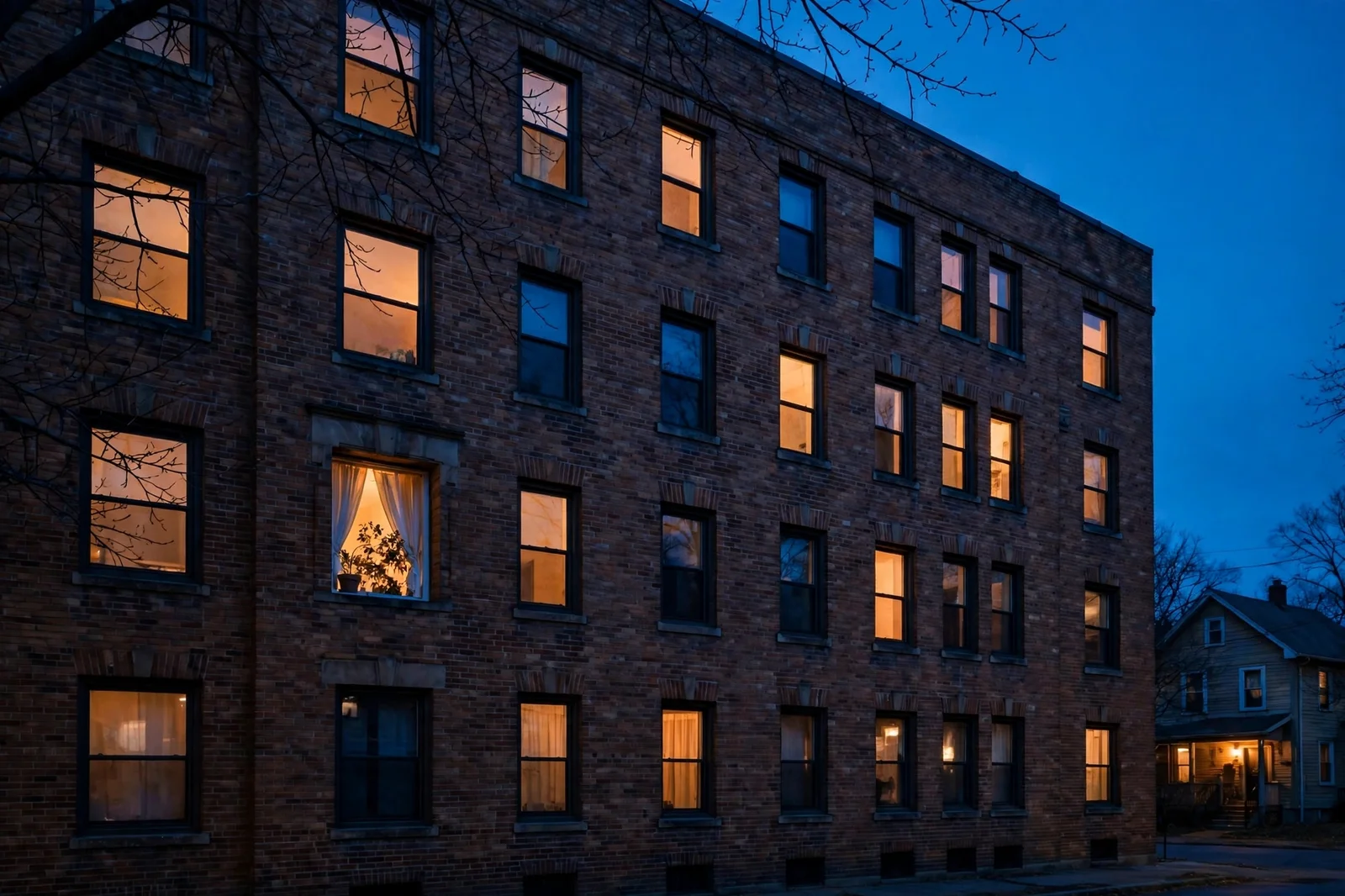
The best light of the day often arrives after the sun goes down. For a short stretch each evening the sky turns deep blue, lamps switch on indoors, and plain buildings fill with warm rectangles of light. Pick one street or one building, arrive before that balance peaks, and shoot the pattern of lit and dark windows while the sky still holds colour.
The idea
Choose one building with plenty of windows and one clear place to stand in front of it from across the street. An apartment block, an office floor above shops, a row of houses or the lit face of a library or a school all work, as long as the facade gives you a grid to play with. Your subject is the pattern itself. Some windows glow warm, some sit dark, a few show curtains, blinds, a plant or a lamp, and together they read like a board mid game. Shoot the whole facade first, then work closer in stages: groups of 4 to 6 windows, pairs that contrast, and single windows with a small story inside them, such as a plant on a sill or a figure reading beside a lamp. Stay outside on public ground at all times, shoot the building rather than the lives inside it, and keep your framing on glass, light and shape. One short prompt keeps the evening focused: count the lit windows and frame only the brightest cluster. You have roughly 20 to 40 minutes of prime balance on a clear evening, so arrive with the pattern already in mind and spend the window shooting instead of searching.
How to capture it
Where and when
Work in the stretch that starts about 10 minutes after sunset and runs for the next 30 to 45 minutes on a clear evening. Early in that stretch the sky still reads pale and the windows look weak. Late in it the sky drops to black and the building floats in darkness with no context left. The sweet spot sits in the middle, when sky brightness and window brightness feel equal and the facade still shows brick, stone or siding between the lights. Cloudy evenings compress the window and soften it, which still works, and the first cold evenings of the season help because people switch lamps on earlier and curtains stay open longer. Stand across the street with the whole facade in view first, then cross only when traffic allows and shoot along the wall at an angle for a second family of frames. A slight rise helps: a low hill, a parking ramp entrance or a raised walkway lifts you above parked cars without tilting the building.
Settings
On a phone, use the main lens and skip the zoom, because digital zoom in low light smears the fine lines of frames and blinds. Tap the brightest window to set focus, then slide exposure down a touch so the lit glass keeps its warm colour instead of blowing out to white. Night mode helps when you hold still, so brace your elbows, lean on a post and let the phone take its longer exposure. Shoot in bursts of 2 to 3 frames as lamps flicker on, because the pattern changes minute by minute and the best arrangement may last only seconds. On a camera, start in aperture priority at f/4 to f/5.6 with auto ISO and a shutter speed of 1/60 of a second or faster when you shoot by hand, so the window edges stay crisp. Meter for the lit glass rather than the dark wall: point the centre of the frame at a bright window, or dial exposure compensation down by about one stop, and check the first frames on the screen. Set white balance to daylight or cloudy rather than auto if the warm glow keeps drifting toward orange mush, and shoot raw if you use it, since mixed light rewards a gentle edit later. A tripod earns its place only for the closest frames, where 1/15 of a second at f/8 keeps a whole cluster sharp.
Composition
Fill the frame with the facade and treat the windows as a grid you get to crop. A straight view from across the street gives you the clean pattern shot, with rows and columns lining up like a chart. Step to one side and shoot at an angle when you want depth, letting the grid stretch and compress toward the edge of the frame. Hunt for contrast inside the grid: one bright window in a dark row, one dark window in a bright row, a pair split by colour, warm gold beside cool white. Leave a strip of blue sky above the roof line in your wide frames, because that band of colour is what tells the viewer the hour without any caption. For close frames, fill the whole picture with glass and frame edges, and let curtains, blinds and plants supply the detail. Keep vertical lines straight by holding the phone or camera level and pointing it at the middle height of the building, since tilting up makes tall facades lean inward at the top.
Mistakes to avoid
- Arriving too late. Once the sky turns black the scene loses its balance and its colour, and the windows become bright holes in a void. Arrive before sunset, scout your standing spot in daylight if you can, and be ready when the first lamps switch on.
- Exposing for the whole scene. Left to itself, a phone or camera brightens the dark facade and burns the lit windows out to flat white. Expose for the glass, accept a darker wall, and the warm colour and detail inside each window survive.
- Aiming into homes. A long lens pointed at one living room stops being a pattern study and starts feeling like watching. Stay wide, stay on the facade as a whole, and skip any frame that centres on a person who has no idea you are there.
Variations to try
- Shoot the change: pick one facade and make the same frame every 5 minutes from sunset onward. The set shows lamps waking up across the building and proves how short the best balance lasts.
- Work one colour of light: some windows glow warm gold, others shine cool white or pale green. Build a set that sorts the facade by colour temperature, one frame per family of light.
- Add reflections: after rain, or from across a calm pond or a wet pavement stretch, shoot the lit windows doubled in the wet ground or the water below the building.
If grids and patterns hook you, the Urban Geometry Week Challenge on the homepage spends seven days finding pattern, repetition and structure in the built environment, and a lit facade at blue hour is the richest single evening that week offers.
Related posts
- Shadow Photography: How to Shoot Strong Shadows and Silhouettes
- What to Photograph on a Rainy Day
- What to Photograph on a Walk in Your Own Neighbourhood
Want another idea like this one? The free SnapTara generator on the homepage hands you a fresh photography prompt in seconds, drawn from more than a thousand hand written assignments, and its themed Challenges turn a single idea into a week or a month of shooting.
Get a photography prompt