SnapTara Blog
What to Photograph on a Walk in Your Own Neighbourhood
Your own neighbourhood is not short of subjects. It only feels that way because you walk past the same doors, signs and corners so often that your eyes stop reporting them. The fix is to slow one short walk right down, stay on a single block, and photograph the small details you usually pass without a second look.
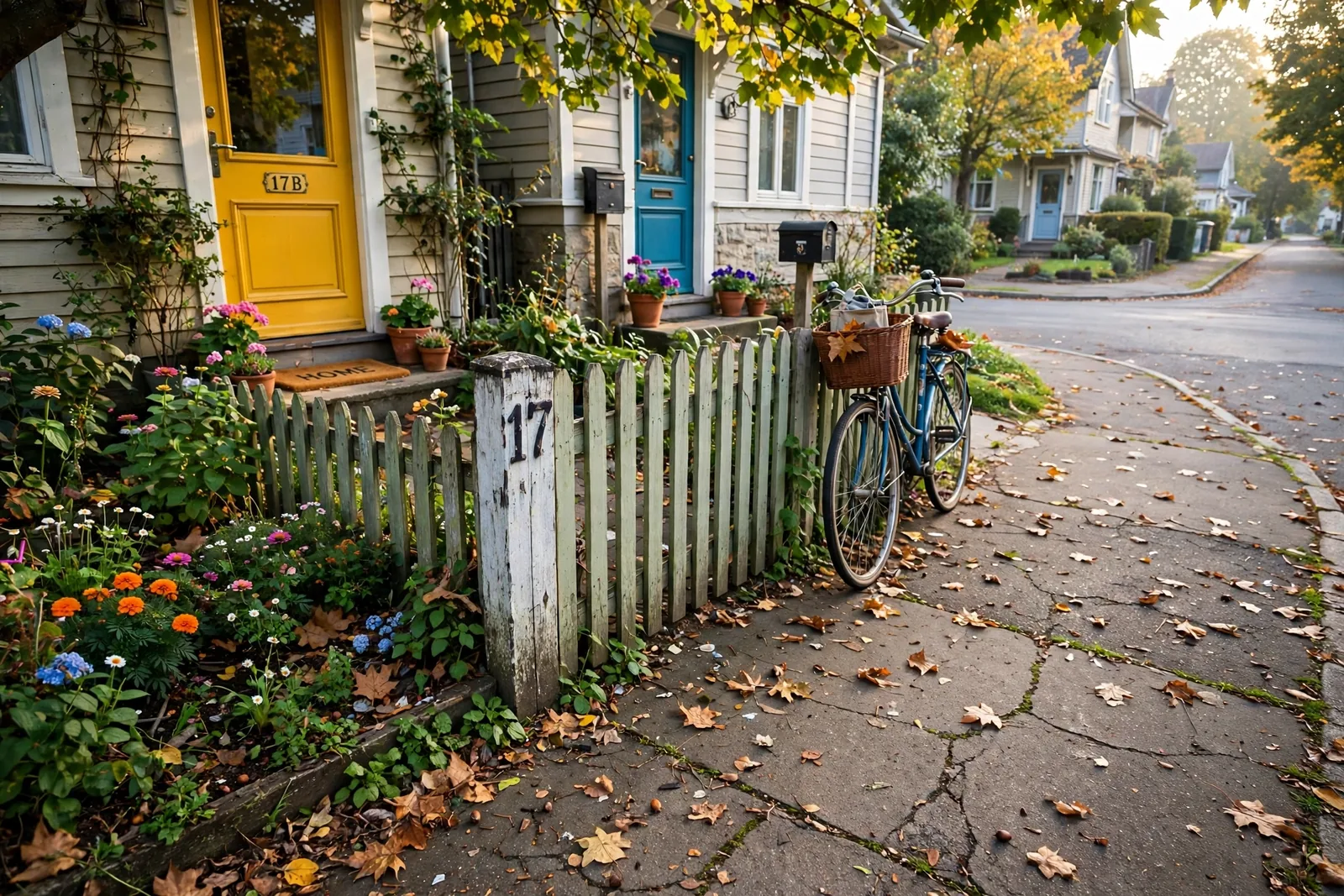
The idea
Pick one block close to home and walk it on both sides, out and back, in about 30 to 45 minutes. Give yourself one rule for the whole walk: photograph only small details, never the whole street. Look for front doors and gates, house numbers, hand painted signs, letter boxes, garden fences, parked bicycles, worn steps, and shadows falling across a wall or a pavement. Work each detail before you move on. Shoot it wide enough to show where it sits, then step closer for colour, texture and shape. One short prompt sums up the walk: photograph only doors and gates for one block. By the end of a single block you will usually have a small set that says more about the place you live than any wide view of the street ever could.
How to capture it
Where and when
Any block you know well will work, and the block you know best is often the best choice because the change in attention is what teaches you to see. Go in the morning or late in the afternoon, when low light rakes across brick, wood and stone and gives flat surfaces real texture. An overcast day works well too, because even light keeps colours clean and lets you shoot doors and signs without harsh contrast. Walk slowly, stop often, and look back along the block as often as you look ahead, because the light and the view change completely when you turn around. Stay on public pavement, keep out of private gardens unless you are invited in, and treat windows as private even when a curtain makes a tempting frame.
Settings
On a phone, use the main lens and walk closer instead of using zoom, because detail is the point of this walk. Tap the door, sign or number to focus, turn the grid on, and slide exposure down a touch when a pale wall or a bright door loses detail in sun. Turn flash off, and use the timer or a steady two hand grip for close details in shade so the frame stays sharp. On a camera, use aperture priority at f/4 to f/5.6 for a single detail so the subject stays clear and the street behind it softens a little, or f/8 when you want a door, a gate and a garden to stay sharp together. Keep shutter speed at 1/250 or faster while you walk, use a single focus point placed on the detail itself, and set ISO to auto so you can keep shooting as you move between sun and shade.
Composition
Think in pairs of frames. First take the wider frame that places the detail on its street, then take the close frame that fills the screen with colour, texture or lettering. Place a door or a number off centre and let a fence, a hedge or a pavement edge lead the eye toward it. Shoot straight on for signs and numbers so the lines stay true, then shoot from a low angle or from the side when you want shape and shadow to do the work. Look for repetition as you walk, such as a row of gates, a run of letter boxes, or steps that repeat down the block, and shoot the pattern once clean and once with one break in it, because the break is often the picture. Leave people out unless they agree to be in the frame; hands opening a gate or a neighbour carrying shopping can add life, but only with a clear yes first.
Mistakes to avoid
- Walking the whole neighbourhood instead of one block. Distance feels productive, but it spreads your attention thin and you come home with wide views and no details. One block, walked slowly on both sides, gives you more pictures and better ones.
- Shooting only wide views of the street. A whole street in one frame rarely says anything specific. Move closer until one door, one number or one worn step fills the frame and carries the picture on its own.
- Photographing into homes or over fences. A good neighbourhood walk respects the place it records. Stay on public ground, avoid shooting through windows, and ask before you photograph a person, a child or a private garden up close.
Variations to try
- One colour on one block: choose a single colour before you leave home and photograph only that colour for the whole walk, in doors, signs, flowers, paint and clothing left out to dry. The limit forces you to look at every house and gate instead of only the pretty ones.
- Doors and gates only: spend the whole walk on entrances. Shoot each door straight on, then look for the number, the handle, the step and the garden that belong to it, and build a small set that reads as a portrait of the block.
- Same block, new light: walk the same block again at a different time of day, or after rain, and remake two or three of your frames. The subjects stay the same and the light does all the changing, which is the clearest lesson a familiar street can teach.
If you enjoy watching light change a familiar place, the Light Chasers Challenge on the homepage builds exactly this habit across two weeks of prompts about light at different times of day, and your own block is the easiest place to practise it.
Want another idea like this one? The free SnapTara generator on the homepage hands you a fresh photography prompt in seconds, drawn from more than a thousand hand written assignments, and its themed Challenges turn a single idea into a week or a month of shooting.
Get a photography prompt